What Is a US LLC? How It Works and How the IRS Taxes It, for Foreign Owners
A US limited liability company explained for founders outside the United States - what an LLC is under state law, who can own one, what "limited liability" means, the three ways the IRS can tax it, what changes when the owner is foreign, and what it must file every year.
 Written by Amel Ouchene, IRS PTIN holderLast updated Not legal or tax advice9 min read

A US LLC (limited liability company) is a company created under the law of one US state, owned by "members", whose debts are in principle the company's own and not its members'. For federal tax purposes it has no fixed category: the IRS treats it as a disregarded entity, a partnership or a corporation depending on how many members it has and on any election it makes. Its owners can live outside the United States (most states do not restrict ownership), and a foreign owner adds one federal filing that a US owner does not have. This guide explains the vocabulary, using the IRS's own pages and the LLC statutes of Wyoming and Delaware.
What is a US LLC? A US limited liability company (LLC) is a business structure created by a state's law. In general, its debts belong to the company and not, merely because of membership, to its owners. A person living outside the United States can own one, and the IRS then treats it as a disregarded entity, a partnership or a corporation depending on the number of owners and any election.
In short:
- Created by a state, not by the federal government. The IRS calls the LLC "a business structure allowed by state statute". You form it with one state (Wyoming, Delaware, New Mexico or another) and follow that state's rules.
- Owners are "members". The IRS: most states "do not restrict ownership, so members may include individuals, corporations, other LLCs and foreign entities". A single owner is allowed.
- Limited liability: under Delaware's statute (Wyoming's says the same in nearly identical words), the LLC's debts are "solely the debts, obligations and liabilities" of the company, not of a member merely because they are a member.
- Three tax classifications: one member, a disregarded entity by default; two or more, a partnership by default; either can elect to be taxed as a corporation with Form 8832.
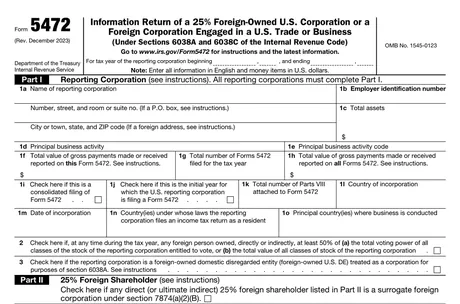
- Foreign owner, one member: for Form 5472 purposes the LLC is treated as a domestic corporation, so it files Form 5472 with a pro forma Form 1120 for each year in which money or other transactions pass between it and its owner, even with no income.
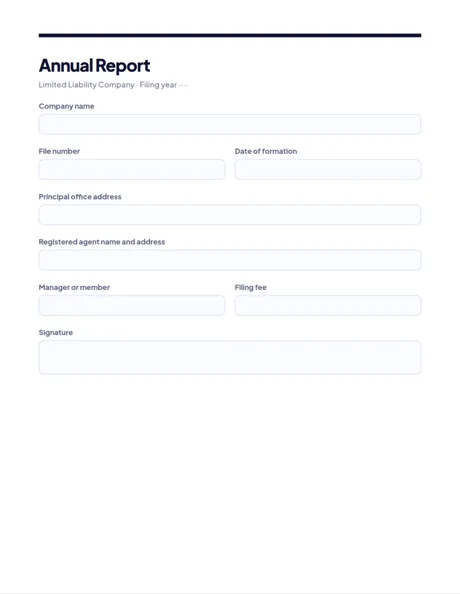
- The LLC itself also has state duties: a registered agent, and in most states an annual report or tax.
What an LLC is
The IRS describes it simply: "A Limited Liability Company (LLC) is a business structure allowed by state statute. Each state may use different regulations, you should check with your state if you are interested in starting a Limited Liability Company." There is no federal LLC. You create one by filing a document with a state: "articles of organization" in Wyoming or New Mexico, a "certificate of formation" in Delaware. From then on the LLC exists under that state's LLC Act, needs a registered agent in that state, and has the state's yearly obligations.
Members. The owners are called members. The IRS notes that "there is no maximum number of members" and that "most states also permit 'single-member' LLCs". Members can be individuals, companies or other LLCs, in the United States or abroad. "A few types of businesses generally cannot be LLCs, such as banks and insurance companies."
The operating agreement. The members' internal rules (who decides, how profits are shared, what happens if a member leaves) are in the LLC agreement, called the operating agreement. State law fills the gaps where the agreement is silent.
Limited liability. This is what the name refers to. Wyoming's statute (W.S. 17-29-304) and Delaware's (6 Del. C. § 18-303) both say that the company's debts, "whether arising in contract, tort or otherwise", are solely the company's, and that a member is not personally liable for them merely because they are a member (Delaware: "solely by reason of being a member"). Delaware adds that a member can agree to be personally liable, for example by signing a personal guarantee for a bank. How far this protection goes in a given dispute is a legal question for a lawyer in that state; Melya does not give legal advice.
How the IRS taxes an LLC: three classifications
This is where an LLC differs from most companies abroad. The IRS: "Depending on elections made by the LLC and the number of members, the IRS will treat an LLC as either a corporation, partnership, or as part of the LLC's owner's tax return (a 'disregarded entity')."
| The LLC has | Default federal classification | It can choose instead |
|---|---|---|
| One member | Disregarded entity: for income tax, its activity is reported by its owner | Corporation, with Form 8832 |
| Two or more members | Partnership: files Form 1065 and gives each member a Schedule K-1 | Corporation, with Form 8832 |
"For income tax purposes, an LLC with only one member is treated as an entity disregarded as separate from its owner, unless it files Form 8832 and elects to be treated as a corporation." A domestic LLC with two or more members "is classified as a partnership for federal income tax purposes unless it files Form 8832 and affirmatively elects to be treated as a corporation". An election generally cannot take effect more than 75 days before the date it is filed. Our Form 8832 guide explains when that choice makes sense and what it costs in filings.
The IRS adds one nuance: "for purposes of employment tax and certain excise taxes, an LLC with only one member is still considered a separate entity."
What changes when the owner is foreign
The yearly Form 5472. A single-member LLC owned by a foreign person is disregarded for income tax, but not for the reporting rules of section 6038A. The regulation says such an entity "is treated as an entity separate from its owner and classified as a domestic corporation for purposes of section 6038A" (Treas. Reg. § 1.6038A-1(c)(1)). In practice, it files Form 5472 attached to a pro forma Form 1120 for each year in which it has a reportable transaction with its owner or another related party. Money the owner puts in or takes out counts, so this is most years for an active LLC. There is no minimum amount, and the penalty for a missing, late or substantially incomplete form is $25,000, with more if the failure continues after an IRS notice. Our line-by-line Form 5472 guide and our page who must file Form 5472 cover it in detail.
An EIN. The LLC needs its own federal tax number. A foreign owner gets it with Form SS-4 by phone, fax or mail, without an SSN: see how to get an EIN without an SSN.
Does the LLC pay US income tax? A disregarded LLC does not pay federal income tax itself: its income is the owner's. Whether a foreign owner owes US income tax, and must file Form 1040-NR, depends mainly on whether the income is effectively connected with a US trade or business, or is US-source income of certain kinds. Our guide what is a nonresident alien explains the distinction, and do you need to file Form 1040-NR applies it to LLC owners. How your home country taxes the LLC's profits is a separate question for an adviser there; Melya does not advise on it.
With two or more foreign members, the LLC is a partnership: Form 1065 and K-1s rather than Form 5472, and possibly section 1446 withholding if it has effectively connected income. See Form 1065 or Form 5472 for a multi-member LLC.
The yearly obligations, in one table
| Who | What | When (calendar year) |
|---|---|---|
| Single-member LLC with a foreign owner | Form 5472 + pro forma Form 1120 (year with a reportable transaction) | April 15, or October 15 with Form 7004 |
| Multi-member LLC (partnership) | Form 1065 + Schedules K-1 | March 15, or September 15 with Form 7004 |
| The state of formation | Annual report and/or tax, registered agent | Depends on the state: see Wyoming, Delaware |
| The owner, depending on income | Form 1040-NR | Depends on the owner's situation |
Our overview what a foreign-owned US LLC files each year goes through each filing, and the deadline calendar gives the dates for your state and structure.
LLC or corporation?
An LLC and a corporation are both companies created under state law with limited liability. The differences that matter most to a foreign founder are tax ones. A corporation (Inc.) owned by a foreign founder is taxed as a C corporation: it files a full Form 1120 and pays US corporate income tax on its taxable profits (the S corporation alternative is not open to nonresident alien shareholders). An LLC is flexible: by default a single-member LLC is not taxed at the entity level, and it can elect corporate treatment later if that suits the business. Founders who raise venture capital are often advised to use a Delaware corporation; small businesses run from abroad more often use an LLC. Which one fits you depends on your plans and on your home country's rules. Our comparison of Wyoming, Delaware and New Mexico covers the choice of state.
How Melya helps
The LLC Formation for Non-Resident Founders bundle (from $399, state fees extra) forms your LLC in the state you choose, prepares and submits the EIN application and gives you an operating agreement template. Every year after that, Form 5472 + pro forma 1120 ($249) is prepared for your signature and faxed with a transmission receipt. Melya signs as paid preparer; it does not represent clients before the IRS, gives no legal advice, and does not advise on the tax rules of your country of residence.
Related reading: Form 8822-B: change of responsible party or address · What to file after Stripe Atlas
Frequently asked questions
What does LLC stand for?
Limited liability company: a company formed under the law of a US state whose debts are, in principle, its own and not its members'.
Can a non-US resident own a US LLC?
Yes. The IRS notes that most states do not restrict ownership, so members can include foreign individuals and foreign companies.
Is a single-member LLC a corporation?
Not by default. For income tax it is a disregarded entity. But if its owner is foreign, it is treated as a domestic corporation for the Form 5472 rules, which is why it files a pro forma Form 1120 with Form 5472.
Does a US LLC pay US tax if the owner lives abroad?
A disregarded LLC pays no federal income tax itself. Whether its foreign owner owes US income tax depends on the type and source of the income, in particular whether it is effectively connected with a US trade or business. The Form 5472 is due for any year with a reportable transaction, whatever the income.
What is the difference between an LLC and an Inc.?
Both are state-law companies with limited liability. An Inc. is taxed as a corporation (for a foreign owner, a C corporation filing Form 1120); an LLC is taxed according to its number of members and any election it makes.
Does an LLC need an operating agreement?
State law fills the gaps when there is none, but banks and payment providers often ask for one, and it records how decisions are made and profits are shared. Melya's formation bundle includes a template.
Sources
- IRS, Limited Liability Company (LLC): definition, members, classifications, Form 8832, 75-day rule.
- IRS, Single member limited liability companies: disregarded entity, employment and excise taxes.
- Treas. Reg. § 1.6038A-1 (eCFR): foreign-owned disregarded entity treated as a domestic corporation for section 6038A.
- IRS, Instructions for Form 5472.
- Wyoming Limited Liability Company Act, W.S. 17-29-304: liability of members and managers.
- Delaware Limited Liability Company Act, 6 Del. C. § 18-303: liability to third parties.
Keep reading

Wyoming vs Delaware vs New Mexico LLC for a Non-Resident: Fees, Upkeep and What Does Not Change
Wyoming, Delaware or New Mexico for a non-US owner? Official formation fees, yearly state costs and what stays the same whichever state you choose (EIN, Form 5472, pro forma 1120, registered agent).
Read the guide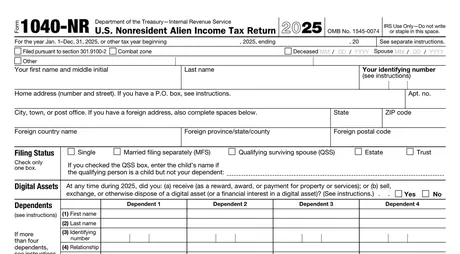
Foreign-Owned US LLC Taxes: What You Must File Each Year (2026 Overview)
You own a US LLC from abroad. The yearly filings in one page: Form 5472 and pro forma 1120 for the LLC, Form 1040-NR for you in some cases, state reports, W-8 forms, and what no longer applies. With deadlines and links to each guide.
Read the guide
What Is a Nonresident Alien? Meaning for US Tax, the Two Tests and What You File
What a nonresident alien is for US tax purposes, the green card test and the substantial presence test, the closer connection exception, what a nonresident is taxed on, and what it means for the foreign owner of a US LLC.
Read the guideThis article is general information about US tax rules for foreign-owned LLCs, not advice for your specific situation. Rules change; check the date above and ask before you file.