Bank Account for a US LLC With a Non-Resident Owner: What Banks Must Ask and What They Add
Opening a US bank account for your LLC from abroad: the federal identity rules banks apply (CIP and beneficial ownership), the EIN, tax forms, and what is a bank's own policy rather than law.
 Written by Amel Ouchene, IRS PTIN holderLast updated Not legal or tax advice6 min read
Opening a bank account for a US LLC when you live abroad is mostly a question of which bank accepts you, not of what the law allows. Federal rules set a minimum list of what a bank must collect. Everything above that minimum is the bank's own policy, and policies differ a lot. This guide separates the two, from the US side only.
In short:
- Law (the minimum). For a person who is not a US person, the bank must collect a name, a date of birth, an address and an identification number. The number can be a taxpayer identification number, a passport number with country of issuance, or another government-issued photo document. For an LLC, it must also identify each individual who owns 25% or more and one individual who controls it.
- Bank policy (varies). Whether it accepts non-residents, opens accounts remotely, asks for an in-person visit, a US address, an SSN or ITIN, or a minimum deposit. No federal rule fixes these. Ask the bank before you apply.
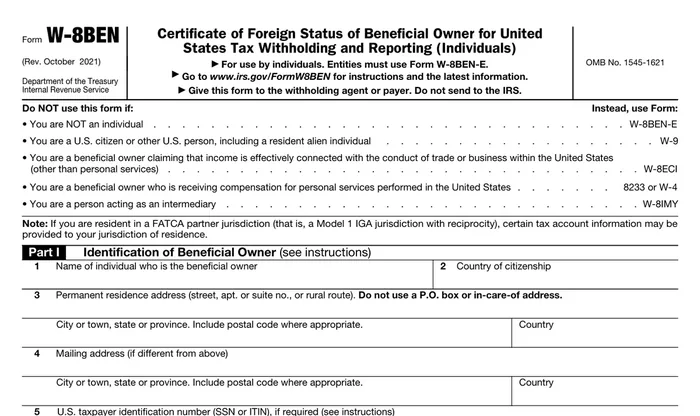
- Tax forms. A single-member LLC owned by a foreign individual gives the bank a Form W-8BEN from the owner, not a W-9. See our W-9 guide.
- Not covered here. Which bank to choose, and the tax or banking rules of your country of residence.
Step 1: what the law makes the bank collect
Two federal rules apply to a bank opening an account for a US LLC.
1. Identity of the customer (Customer Identification Program). Under 31 CFR 1020.220, a bank must obtain, before opening an account, at least the name, the date of birth for an individual, an address, and an identification number. For a non-US person, the identification number can be:
- a taxpayer identification number;
- a passport number and country of issuance;
- an alien identification card number; or
- the number and country of issuance of another government-issued document evidencing nationality or residence and bearing a photograph or similar safeguard.
The bank must then verify the identity within a reasonable time after the account is opened, using documents, other methods, or both, according to its own written procedures. In other words, the law does not require an SSN for a non-US person; it lists alternatives.
2. Beneficial owners of a legal entity. An LLC is a "legal entity customer" under 31 CFR 1010.230. At the time a new account is opened, the bank must identify the beneficial owners. The rule defines them as:
- Ownership: each individual who, directly or indirectly, owns 25% or more of the equity interests; and
- Control: a single individual with significant responsibility to control, manage or direct the entity.
For a single-member LLC, the owner is both: expect to give your own name, date of birth, address and identification number again as the beneficial owner.
Step 2: what the bank usually adds (its own policy)
Many banks ask for more than the minimum. These requests come from their internal risk rules, not from a law that applies to every bank. Typical examples are the LLC's formation document, its EIN confirmation, an operating agreement, proof of the owner's address, a description of the business, and whether the owner must be present. Some banks do not open accounts for owners who live abroad at all. We cannot tell you which bank accepts you; ask the bank what it needs before you apply, and keep the answers in writing.
The documents you should have ready
- The LLC's EIN. Banks ask for the EIN. If the LLC does not have one yet, see how a foreign owner gets an EIN without an SSN. If you lost it, see finding a lost EIN.
- The state formation document (articles of organization or certificate of formation). To compare states, see Wyoming vs Delaware vs New Mexico.
- A valid passport or other government photo ID, as in the list above.
- Proof of address, if the bank asks for it.
- The right tax form. For a single-member LLC owned by a foreign individual: Form W-8BEN from the owner, with the LLC's name in the reference-number line. See Form W-8BEN line by line.
Tax points to settle at the same time
- The bank account does not change what the LLC files with the IRS. A foreign-owned single-member LLC still files a pro forma Form 1120 with Form 5472 each year, even with little activity. See Form 5472 line by line.
- FinCEN's beneficial ownership reporting for companies is a separate rule from the bank's account-opening rule. See our BOI guide for the current status.
What Melya can do
- Banking & Payments Compliance, $149: a W-8BEN or W-8BEN-E prepared for your signature, plus a foreign qualification check.
- W-8BEN or W-8BEN-E Preparation, $69: the form that matches your structure.
- Form 5472 and pro forma 1120 filing: the yearly federal filing.
Melya is a tax preparation business whose founder holds a PTIN. We do not open bank accounts, we do not choose a bank for you, we do not represent you before the IRS and we do not give legal advice.
Related guides
- Bank asks for a W-9: what to send
- EIN for a US LLC without an SSN
- What a foreign-owned US LLC files each year
- Form W-8BEN-E for a US LLC owner
- Wyoming vs Delaware vs New Mexico LLC
Frequently asked questions
Can I open a US bank account for my LLC without an SSN?
The federal identity rule does not require an SSN for a non-US person. It accepts a taxpayer identification number or a passport number with country of issuance, or another government photo document. A bank can still ask for more under its own policy.
Does the LLC need an EIN to open a business account?
Banks generally ask for it, and that is a bank requirement. The LLC also needs an EIN for its IRS filings. See our EIN guide.
Does the bank send my information to the IRS?
The bank collects tax forms (W-8BEN or W-9) and may report certain payments. What is reported depends on the account and on your status. We do not cover reporting to your country of residence.
Do I give the bank a W-9 or a W-8BEN?
For a single-member LLC owned by a foreign individual, the IRS instructions say the owner gives a Form W-8BEN, not a W-9. See our W-9 guide.
Does opening a bank account change my Form 5472 obligation?
No. Form 5472 is required because the LLC is foreign-owned, whether or not it has a bank account.
Sources
- 31 CFR 1020.220, Customer identification programs for banks (eCFR): information required for an individual, identification number for a non-US person, verification.
- 31 CFR 1010.230, Beneficial ownership requirements for legal entity customers (eCFR): legal entity customer, ownership and control prongs, account opening.
- IRS, Instructions for the Requester of Form W-9 and Form W-9 and Instructions for Form W-8BEN: disregarded entity owned by a foreign person.
- IRS, Instructions for Form 5472.
This page summarizes federal rules and IRS instructions. It is not legal or tax advice, does not recommend a bank, and does not cover the law of your country of residence.
Keep reading
Bank Asking for a W-9? What a Foreign-Owned US LLC Should Send (W-9, W-8BEN or W-8BEN-E)
Your bank or platform asks your US LLC for a W-9, but you own it from abroad. What the IRS instructions say about W-9 vs W-8BEN vs W-8BEN-E, the name and EIN traps, and what happens when a payer has no form.
Read the guide
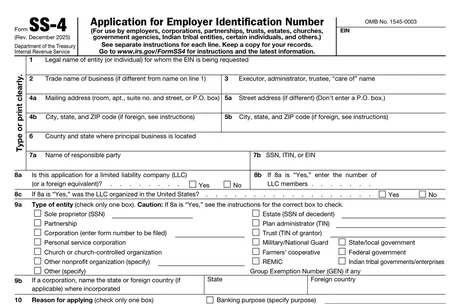
How to Get an EIN for Your US LLC Without an SSN or ITIN: Form SS-4, Fax Number and Phone
Foreign owners cannot use the IRS online EIN application. How to apply by phone, fax or mail, how to fill in Form SS-4 line by line for a foreign-owned single-member LLC, and the mistakes that delay the number.
Read the guide
Does My US LLC Still Need a BOI Report in 2026? The Final FinCEN Rule for Foreign Owners
FinCEN's final rule of August 14, 2026 confirms that LLCs formed in the US no longer file BOI reports, even when the owner lives abroad. Who still files, what changed, and how to spot BOI scams.
Read the guideThis article is general information about US tax rules for foreign-owned LLCs, not advice for your specific situation. Rules change; check the date above and ask before you file.